
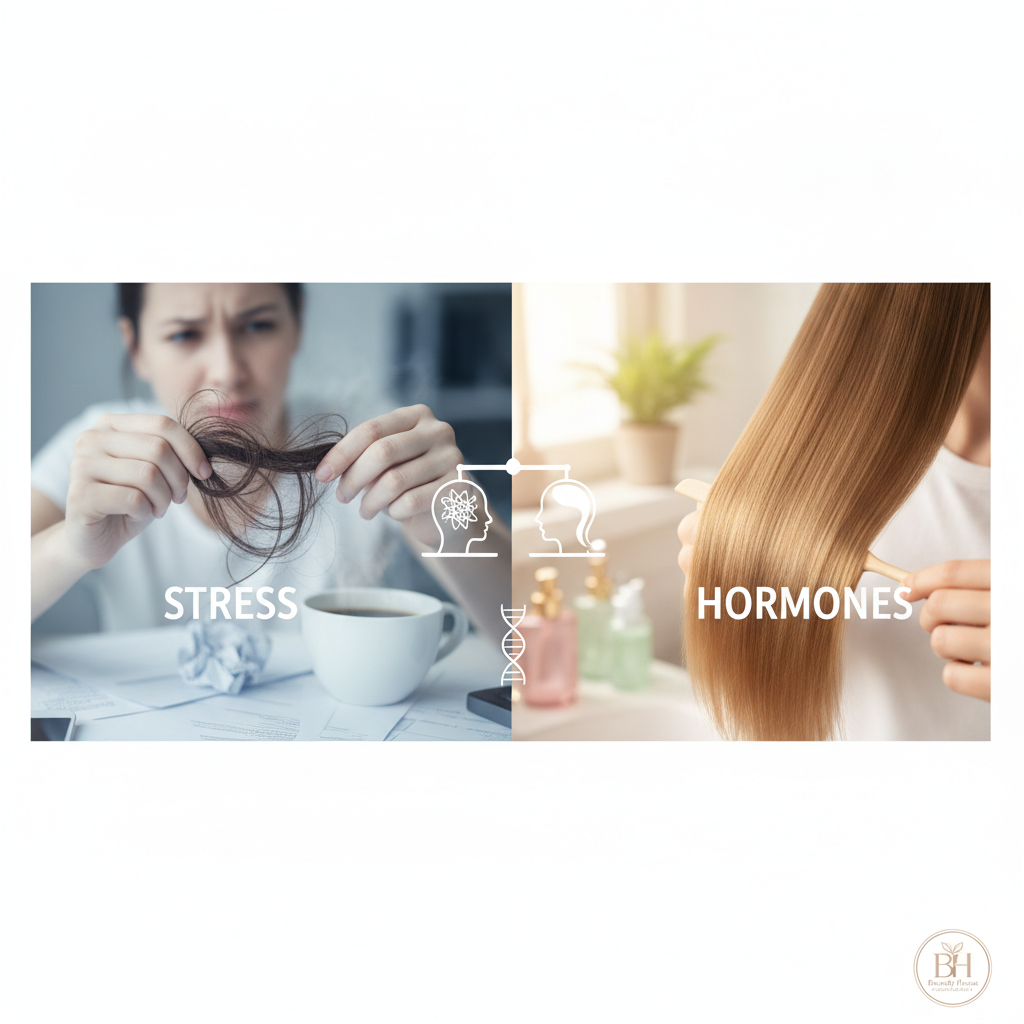
Thinning hair or a receding hairline can be a distressing experience for both men and women. In the fast-paced world we live in, many people attribute their shedding to a busy lifestyle. However, the root cause is often more complex, typically boiling down to two main culprits: psychological pressure and biological shifts. Understanding hair loss due to stress or hormones: how to differentiate and treat it is essential for anyone looking to restore their confidence and scalp health.
At Beauty House Cosmetology, we believe that an informed patient is a successful patient. By identifying whether your hair loss is a temporary reaction to external factors or a long-term internal hormonal shift, you can choose the right path toward restoration. This guide will walk you through the key differences and the professional solutions available at our clinic.
Understanding Stress-Induced Hair Loss: Telogen Effluvium
When we talk about stress and hair health, we are usually referring to a condition called Telogen Effluvium. Under normal circumstances, about 85% to 90% of your hair is in the growing phase. However, significant physical or emotional stress can shock the system, forcing a large number of hair follicles into the "resting" phase prematurely.
A few months after the stressful event—be it a demanding project at work, a personal loss, or even a severe illness—those hairs begin to fall out simultaneously. This type of shedding is usually diffuse, meaning you will notice hair coming out from all over the scalp rather than in specific spots. The good news is that stress-related hair loss is often temporary, provided the underlying stressor is managed.
Identifying Hormonal Hair Loss: Androgenetic Alopecia and Beyond
Hormonal hair loss is different because it is often tied to genetics and long-term chemical changes within the body. In men and women, the hormone dihydrotestosterone (DHT) can cause hair follicles to shrink, a process known as miniaturization. This leads to the most common form of hair loss: androgenetic alopecia.
Other hormonal factors include thyroid imbalances, pregnancy, and menopause. Unlike the sudden shedding seen with stress, hormonal hair loss tends to follow a specific pattern. In men, this is the classic "M" shape or thinning at the crown. In women, it often manifests as a widening of the part line or general thinning at the top of the head while the back remains dense. According to the American Academy of Dermatology, identifying these patterns early is crucial for effective intervention.
Hair Loss Due to Stress or Hormones: How to Differentiate and Treat It Effectively
If you are struggling to identify the cause, consider the timeline and the pattern. Ask yourself these three questions:
- How fast did it happen? Sudden shedding of large clumps is typically stress-related. Gradual thinning over years is usually hormonal.
- Where is the hair thinning? If it is localized to the temples or the crown, think hormones. If it is evenly distributed across the entire head, think stress.
- Are there other symptoms? Hormonal imbalances often come with other signs like skin changes, weight fluctuations, or mood shifts.
Once you have a clearer picture, the next step is treatment. For stress-induced cases, focus on scalp stimulation and nutrition. For hormonal cases, medical-grade treatments that block DHT or revitalize dormant follicles are necessary. At Beauty House Clinic, we specialize in diagnostic consultations that take the guesswork out of the process, ensuring you receive a tailored plan that works for your specific biological profile.
Professional Treatments at Beauty House Clinic
Treating hair loss requires a multi-faceted approach. Depending on your diagnosis, our specialists might recommend Capillary Mesotherapy, which involves injecting a cocktail of vitamins, minerals, and amino acids directly into the scalp. This nourishes the follicle and stimulates blood flow, which is excellent for both stress and hormonal recovery.
For those experiencing more advanced hormonal thinning, we offer advanced regenerative therapies that encourage the scalp to produce thicker, stronger strands. The goal is not just to stop the loss, but to improve the quality of the hair that remains, ensuring a fuller and healthier appearance.
Expert Hair Care Across the Costa del Sol
Living in a beautiful coastal region doesn't mean you are immune to the stress of modern life or the changes that come with aging. Beauty House Clinic is proud to be the leading destination for hair health for residents throughout the Costa del Sol. We understand that convenience is key when committing to a treatment plan.
Whether you are looking for specialized hair restoration in Fuengirola or Mijas, or you are seeking a professional consultation in Benalmádena and Torremolinos, our doors are open. We also serve a wide range of clients from Málaga, Marbella, and Estepona, providing a central hub of excellence for aesthetic and trichological health. By choosing a local specialist, you can easily maintain the regular sessions required for the best results without the stress of long-distance travel.
Take the First Step Toward Restoration
Recognizing the difference between stress-induced shedding and hormonal thinning is the first step toward regaining your hair. You do not have to navigate this journey alone. Our expert team at Beauty House Cosmetology is dedicated to providing science-backed solutions in a comfortable, professional environment.
If you have noticed more hair in your brush or a change in your hair's density, don't wait for the problem to progress. Early intervention is the most effective way to save your natural hair. Contact Beauty House Clinic today to schedule your evaluation and discover why we are the trusted choice for hair health from Málaga to Estepona. Your journey to a fuller head of hair starts with a single, expert consultation.